



THE CAST IRON MELTING PROCESS
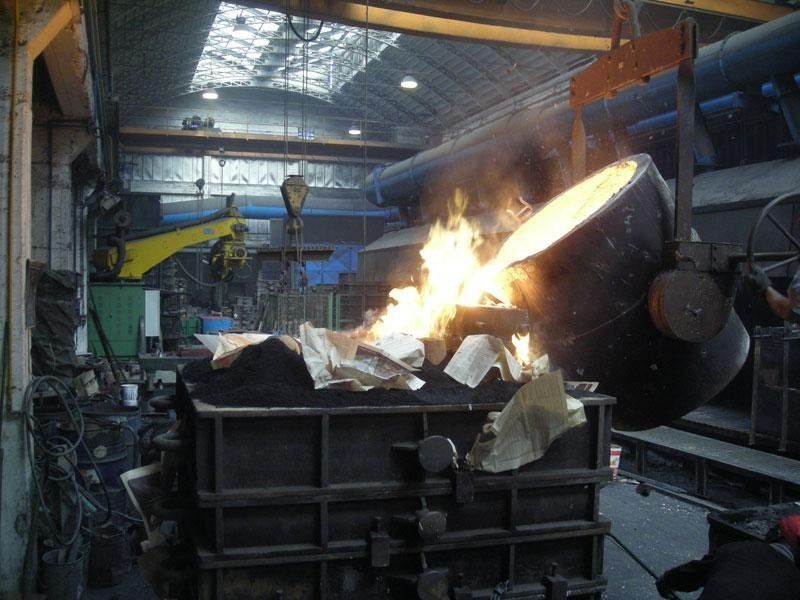
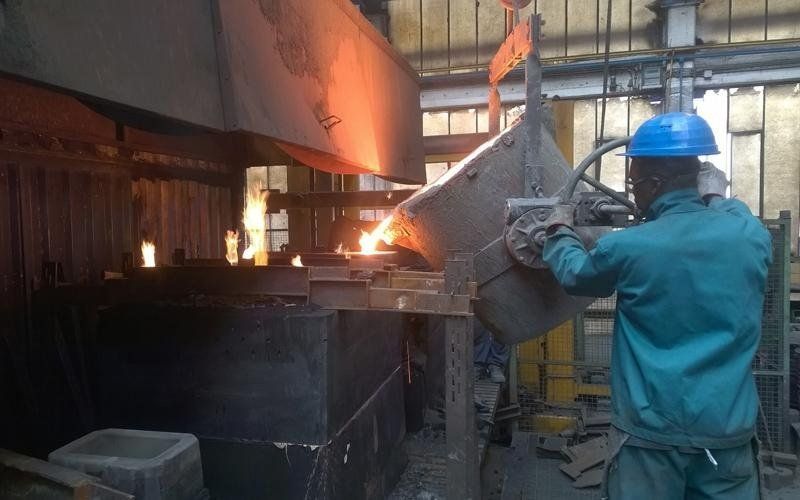
Cast iron castings are manufactured using a high-temperature process that allows for the precise shaping and production of objects made from this alloy. At the Fonderia Quaglia & Colombo, the cast iron manufacturing process is meticulously monitored to produce high-quality cast iron castings with customizable features that make them suitable for specific applications.
Contact us for a consultation and a personalized quote!
Cast Iron Production
Cast iron is a metal alloy made from the union of iron and carbon, which are worked through the process of smelting at high temperatures. Compared to other alloys, cast iron has a high carbon content, with percentages ranging from 2% to 6.67%.
In blast furnaces, the hot treatment occurs with the combustion of iron and carbon, which, upon reaching the melting temperature, turns into a liquid state. Once the fusion is achieved with the casting of the cast iron, the production process ends with the solidification of the alloy inside specific moulds.
Melting point of cast iron
The melting temperature of cast iron begins between 1150 and 1350°C, varying depending on the type of cast iron produced and the type of carbon used (source). The temperature required for the melting and subsequent processing of cast iron is achieved in blast furnaces, where, thanks to an internal airflow, temperatures of up to 2000 degrees are reached.
Over time, the techniques for casting cast iron have evolved in the foundry industry, reaching new quality standards, with more precise and controlled production. In the past, the main processing of cast iron took place in sand moulds, before moving on to shell mould casting and the more modern technique of producing hydraulic cast iron through continuous casting.
Earth cast iron
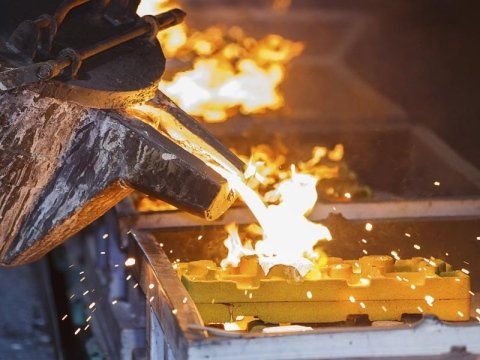
Sand casting is a method that involves pouring cast iron into moulds made from a material called "foundry sand."
Once the cast iron has solidified, the sand mould is broken to extract the finished item.
This casting process is cost-effective and suitable for the large-scale production of cast iron parts. The product from sand casting is a rough cast iron that often requires finishing to smooth its surface.
Cast iron casting in shell
Shell mould casting involves pouring cast iron into metal moulds, which, unlike "sand" moulds, are reusable and do not require breaking.
The cast iron is poured into the mould through a pouring channel, made of cast iron or steel, for cooling. The moulds are equipped with venting channels that allow the residual gas to escape.
The shell mould casting process is primarily suited for the production of small-sized items, with a good level of finishing, and on a large scale.
Continuous casting, hydraulic cast iron
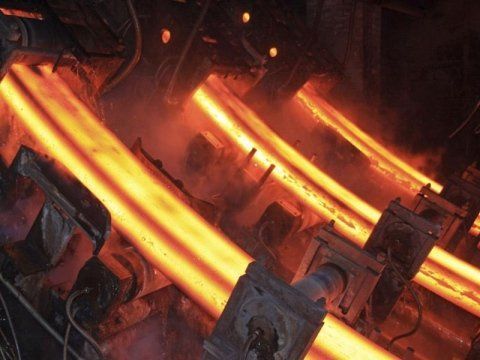
Continuous casting involves pouring cast iron into special cylindrical shapes.
The cooling process is forced, as the mold is cooled in water. Thanks to the high compactness of the cast iron inside the molds, the resulting product is free of irregularities and roughness.
The continuous casting process is used to produce bars, fittings, and valves for hydraulic use, hence the name hydraulic cast iron.
Type of Cast Iron
The casting of cast iron depends not only on the tools used for moulding and pouring the metal, but also on the type of materials that will then combine to create the cast iron. Depending on the type of carbon, cast iron is divided into spheroidal and lamellar (also called grey cast iron).
Spheroidal cast iron, of superior quality, uses carbon in the form of spherical graphite and is more ductile and machinable.
Grey cast iron, on the other hand, contains carbon in the form of lamellar graphite, resulting in cast iron that is more resistant to cutting and impact.
Fonderia Quaglia e Colombo specialises in the casting of cast iron for the production of mechanical and industrial components. Contact us for more information on cast iron projects and productions.
FAQ
What is meant by iron castings?
Iron castings are industrial processes that allow metal components to be obtained by melting and pouring the alloy into special molds.
What is the melting point of cast iron?
The melting temperature generally varies between 1150 and 1350 °C, depending on the composition of the alloy and the type of cast iron produced.
What are the main methods of casting cast iron?
The most common methods are sand casting, shell casting and continuous casting, each suited to specific production needs.
What is hydraulic cast iron used for?
Hydraulic cast iron is mainly used for the production of rods, fittings and valves used in hydraulic systems.
Do cast iron castings allow for custom production?
Yes, the casting process allows the shape, size and characteristics of the castings to be adapted to the application context.