



THE HISTORY OF THE CRAFTSMANSHIP FOUNDRY QUAGLIA & COLOMBO IN LEGNANO, MILAN
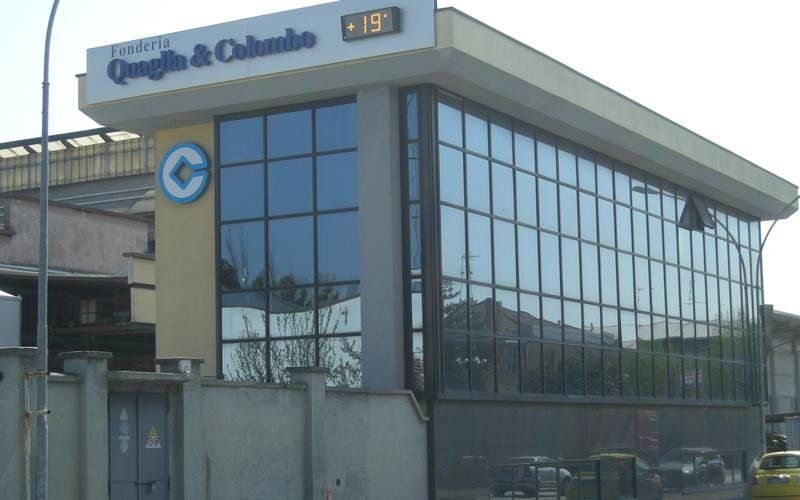
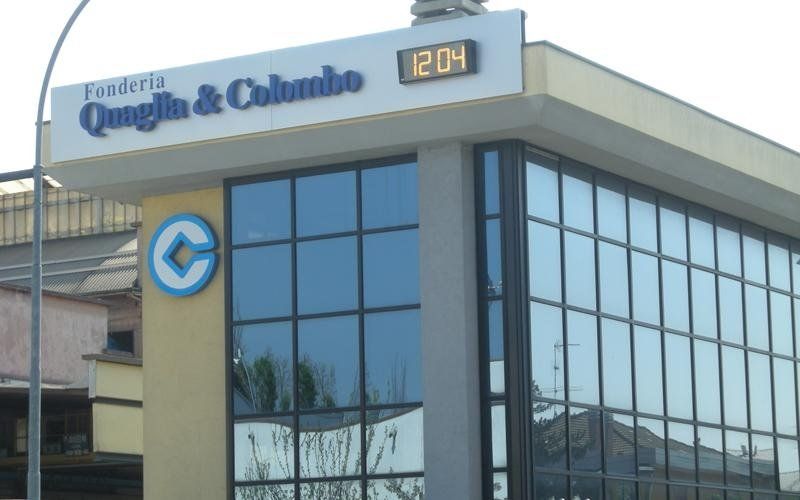
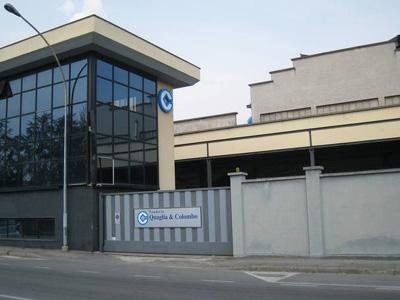
The History of the Fonderia Quaglia & Colombo has always been closely tied to its local area and the passion of its founders. It all began with a group of enterprising young men, former members of the historic Franco Tosi mechanical engineering company in Legnano, who, with determination and expertise, decided to launch a small artisanal business. However, it was thanks to their encounter with Luigi Colombo, a far-sighted local entrepreneur, that the project took a decisive turn. Colombo, recognizing the potential and value of their ideas, chose to invest resources and trust in this new venture, building the foundry's first industrial warehouse in 1949, a crucial step that marked the beginning of its transformation from an artisanal workshop to a fully-fledged industry.
The artisan foundry not only grew, but became a symbol of the bond between tradition, innovation, and territory, always maintaining a deep connection with its local roots.
Contact us for a consultation and a personalized quote!
Artisan foundry in constant growth
The company has consistently grown its production capacity, consolidating its presence in the industry. However, the real turning point came in 1964, when Giuseppe, a promising young engineer and Luigi's son, joined the company after a training period at the prestigious Monfort foundry in Mönchengladbach, Germany. This period abroad allowed Giuseppe to acquire advanced technical skills and a modern vision of production processes, which he immediately decided to apply to the family business.
From the very beginning, Mr. Colombo focused on constant technological and production improvements.
Under his leadership, a series of innovations were introduced that were crucial to the growth of the artisanal foundry, gradually transforming it into a modern and competitive enterprise. The traditional production of gray cast iron was joined by the production of ductile iron, a more durable and versatile material. Furthermore, the old cupola furnaces were replaced with more efficient and environmentally friendly electric furnaces. Another important breakthrough was the introduction of No-Bake molding, which improved the precision and quality of the products, and the automation of green casting, which increased productivity while maintaining high standards.
In the 1990s, the family tradition continued with the entry of Giuseppe's sons, Luigi and Paolo, into the company. The two brothers, heirs to a wealth of experience and with an eye to the future, pushed the company towards a further evolutionary step: the complete automation of all production processes. Their work allowed the company not only to consolidate its market position but also to become an example of innovation and tradition in the metal casting industry.
Discover the art of blending tradition and innovation with the Fonderia Quaglia & Colombo. Trust our passion and quality for safe, cutting-edge solutions!

FAQ
What distinguishes an artisanal foundry from an industrial one?
An artisanal foundry combines specialized manual skills with structured production processes, ensuring direct control and attention to detail.
What materials are worked in an artisanal foundry?
The processing mainly concerns grey cast iron and spheroidal cast iron, with processes suited to the different mechanical characteristics of the materials.
Does the artisanal foundry use modern technologies?
Yes, modern technologies are integrated with traditional processes to improve efficiency, precision, and quality control.
How is the quality control of the castings carried out?
The inspection is carried out in several phases, from melting to solidification, up to the final dimensional and structural checks.
Can the artisanal foundry handle continuous production?
By automating processes, it is possible to ensure production continuity while maintaining consistent quality standards.